
Perched high over the ocean, the traditional lifeguard has a whistle slung over their neck and sun glittering off their spectacles. Though it is everywhere, this classic shot hardly conveys the depths of what it actually means to be a lifeguard. Getting your lifeguard certification entails so much more than just a tan and summer job. It’s a transformational path that gives you a deep collection of physical, emotional, and intellectual abilities that will be very useful at the pool, the beach, and everywhere in your life. Becoming a leader in crisis, a confident first responder, and a protector of safety requires dedication.
Designed to get you ready for the great duty you will bear, the path toward certification is demanding and difficult. Reputable institutions such as the American Lifeguard Association plan their training to create well-rounded experts rather than just skilled rescuers. Let’s examine the fundamental abilities you will develop on your path to achieving that much-desired degree.
Water Rescue Expertise: The Building Block of Action
Fundamentally, lifeguarding is about responding to water mishaps. Your main intervention instruments are the physical abilities you pick up. This starts with great swimming skills. Certification programs call on applicants to show excellent speed, form, and stamina via timed swims sans hand usage. This establishes the basic level of comfort and fitness in the water needed for the part.
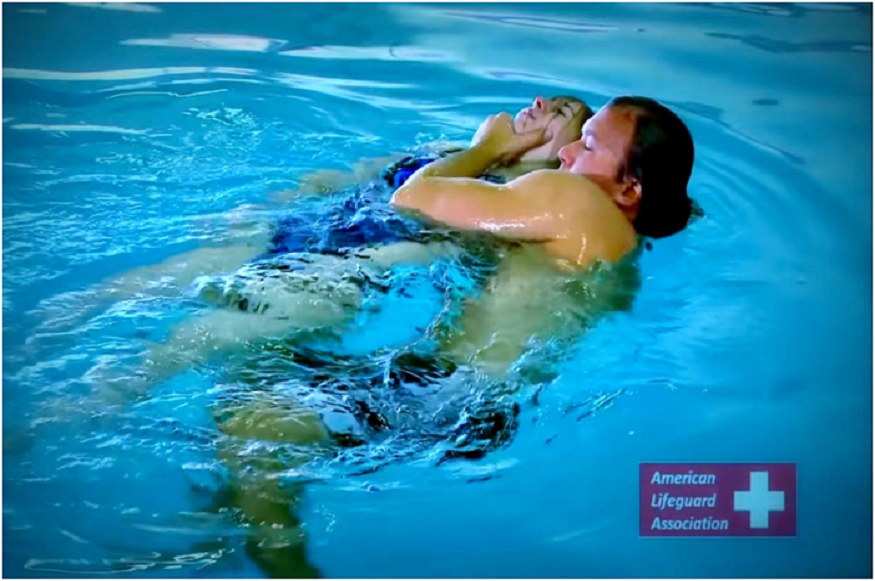
Fast swimming is only the start, though. You will become an expert in many specific rescue methods, each suited to a particular situation. The front crawl you use for fitness is swapped with a strong heads-up freestyle so you can keep your gaze on a victim as you approach. You will learn to use rescue tubes and other gear as active tools for towing both conscious and unconscious victims to safety, rather than merely as floating aids.
Read More: The Deep Satisfaction of Performing Rescues and Saving Lives
The way one approaches a terrified person may be among the most important abilities. Their terror may mean that a rescuer faces a great risk from a drowning person. Using defensive techniques and your rescue gear to establish a safe distance while yet offering help, you will be taught exact procedures to resist being snatched and pulled under. These are thoroughly choreographed and regularly rehearsed till they become second nature, not spontaneous activities.
Vigilant Scanning and Surveillance Methodologies
Above all, a lifeguard must stop an emergency before it starts. This is accomplished via organized and deliberate surveillance. As part of your training, you will develop the disciplined ability to scan instead of just watching the water.
This ability develops past merely spotting a drowning person. Before possibly hazardous activities—such as careless diving, jogging on wet decks, or roughhousing in the water—cause damage, you will learn to spot them. Though psychologically taxing, this ongoing, intrusive monitoring is absolutely vital. Mastering this first and most important line of defense makes you more likely to prevent an event using a proactive approach, whistle blast, or more than a theatrical in-water rescue.
First Aid Knowledge and Emergency Response
A lifeguard must switch immediately into emergency response mode when prevention fails. Your lifeguard certificate education will transform you into an assured first responder. Training in First Aid, CPR, and Automated External Defibrillator (AED) takes up a major part of the lifeguard course. You will discover how to evaluate a scene for safety, do a basic assessment to look for life-threatening events, and handle everything from tiny cuts and bruises to spinal injuries.
The arguably most important tool a lifeguard possesses is the capacity to administer top-notch cardiopulmonary resuscitation (CPR). You will practice on manikins until the rhythm and depth of chest compressions and the timing of rescue breaths become muscle memory. Similarly, you will study how to run an AED, a tool able to shock a heart back into regular rhythm.
You will become proficient in sophisticated in-water stabilization methods and the cautious, team-based victim extraction onto a backboard for possible spinal injuries—a major danger in aquatic settings. From the time you arrive at a victim until professional emergency medical services arrive, this thorough medical training guarantees you can give crucial care.
Teamwork and Communication: The Human Element
A lifeguard is never an island. The adhesive that keeps a safety crew together is efficient communication. Your instruction will highlight both nonverbal and spoken communication techniques. You will discover how to alert someone or signal a code with particular, globally acknowledged whistle blasts. You will uphold safety regulations by instructing visitors with clear, strong, and polite commands.
Moreover, you will discover how to collaborate effortlessly in a team. You will coordinate with other lifeguards in multi-victim scenarios, allocate responsibilities, and help one another under stress during training simulations. This includes interaction with emergency responders and management.
Over the radio, you will learn how to gently and clearly communicate important facts, including the exact location, nature of the injury, and kind of help needed. Valuable, these interpersonal abilities help all consumers create a cohesive and strong safety net.
Leadership and Professionalism under Stress
Pathways to lifeguard certification finally develop a great feeling of professionalism and leadership. From the time you wear the uniform, you start to serve as an authority figure and an example. The training gives you the courage to manage a turbulent scene. Because you know that panic is contagious, you develop the ability to exude an air of calm control even when your heart is pounding. Beyond the swimming pool deck, one should be able to control one’s own stress and make sensible, logical decisions in a critical setting.
From your attitude and customer service to your attire and punctuality, this professionalism covers everything. You represent the standards of the organization that certified you, as well as the institution you work for. For instance, the American Lifeguard Association stresses the need for this expert conduct as it recognizes that a lifeguard’s demeanor can directly affect the general safety culture of an aquatic facility.
Finally, obtaining a lifeguard certification is a decision that has advantages much beyond a wage. Investing in oneself yields returns in character, competence, and confidence. From life-saving medical procedures and exact rescue methods to disciplined surveillance and relentless leadership, the abilities you develop are really life skills.
They get you ready not only to save a life but also to live one with resilience and intent. Thus, should you be thinking about taking the plunge, be aware that you are starting on a path that will transform you, providing you with the necessary instruments to have a significant influence at the most important moment.